Showing posts with label Software Tutorials. Show all posts

Thursday, June 3, 2021

IDM May 2021 update. Best Downloading Manager to download files with Maximum high speed.


Introduction


IDM May 2021 update. Best Downloading Manager to download files with Maximum high speed.


IDM or Internet Download Manager 6.38 build 25. It is one of the best and must have software for every PC for faster downloads. In this new version they have fixed problems with downloading for several types of video streams and Improved downloading from sharing and other web sites that generate temporary links that can be requested one time only.

This download manager speeds up download process to maximum available limit, upto 5 times of normal browsers downloading speed.It has a error recovery system which can resume any broken download which was caused by lost connections, network problems, computer shutdowns, or unexpected power outages.
It has a smart mechanism to download a file in multi-parts and thus accelerate downloading process dynamically.

There was an error coming in some PC : “IDM is corrupt” , as shown in the picture. It is also fixed in this May 2021 update.

Improved download engine and Fixed bugs.

Also, In previous cracks many users were having problem of the “Fake Serial Key Popup” which pops and interupts the users on regular intervals.

IDM 6.28 b5 (1)

This version of patch will solve this issue and you can enjoy it’s full version.

Internet Download Manager supports proxy servers, ftp and http protocols, firewalls, redirects, cookies, authorization, audio and video content processing. IDM integrates seamlessly into Microsoft Internet Explorer, Netscape, MSN Explorer, AOL, Opera, Mozilla, Mozilla Firefox, Mozilla Firebird, Avant Browser, MyIE2, and all other popular browsers
It gives you options to download youtube or other videos directly from your browser with IDM extentions and plugins.


Internet Download Manager v6.38. Added Windows 10 compatibility. Fixed compatibility problems with different browsers including Internet Explorer 11, Microsoft Edge, all Mozilla Firefox and Google Chrome versions.


Features


Features of IDM Internet Download Manager :

Easy downloading with one click.

When you click on a download link in a browser, IDM will take over the download and accelerate it.

Video grabber.

Internet Download Manager can record and download FLV videos from popular sites like MySpaceTV, Youtube and many more..

Download Speed Acceleration.

Internet Download Manager can accelerate downloads by up to 5 times due to its intelligent dynamic file segmentation technology.

Download Resume.

Internet Download Manager will resume unfinished download from the place where they left off.

Automatic Antivirus checking.

Antivirus checking makes your downloads free from viruses and trojans. IDM can automatically run a scanner on download completion,

Advanced Browser Integration.

When enabled, the feature can be used to catch any download from any application. None of download managers have this feature.

What’s new in this version 6.38 Build 25 :
  • Improved download engine
  • Fixed bugs

Check full version history here.


Download


Download IDM 6.38 build 25 Setup + Crack (11.5 MB) from here.
(file name : idm638.25 (ask4pc).rar)

Mediafire [Best] 


Wednesday, August 19, 2020

How to Watch Movies and TV Shows in Android , Windows , Mac and Linux (No Emulator )for Free From All Streaming Services in August 2020 Updated

How to Watch Movies and TV Shows in Android , Windows , Mac and Linux (No Emulator )for Free From All Streaming Services in August 2020 Updated


While many people subscribe to at least one paid service, there are still quite a few streaming services out there that offer licensed programming without charging their viewers a monthly membership or pay-per-view fee.
Sound too good to be true? Believe it or not, it’s not. These free services afford fee-free streaming through sponsorships with film studios and other web-based companies, partnerships with film and university libraries, and of course, ad support.
While their content isn’t as diverse or as plentiful as that of the Netflix or Hulu, the services have several things going for them. The quality of the videos available is usually great, many services have their own specialty (e.g., TV shows, documentaries, vintage and classic movies), and you might even stumble into a few obscure, hard-to-find titles. (As with all video services, the availability of movies and shows changes from month to month, so the examples that follow were on the services at the time of publication.)
Intrigued? Try these free streaming services to start. (And check out our guide to setting up streaming services on your TV.)
Watch 3000+ Indian and International Channels with 7 days of Indian CATCHUP TV and 3000+ Movies and VODs and TV Serials from anywhere in the World on ANY Device for absolutely FREE.All you need is a Internet Connection.

Android Device
For Mobiles, TV, Tabs, Firestick
Minimum Android Version: 4.4.4
Download Link

Mirror Link

Download on Aptoide Store


Windows Device
For PCs, Laptops
Please turn off antivirus if it blocks our package. Its a false alarm.

64-bit
DRM Supported
Download Link

Mirror Link

Portable Version

32-bit
DRM Supported
Download Link

Mirror Link

Portable Version

Linux Device
For PCs, Laptops

DRM Supported
Download Link

Mirror Link

Unpacked


Mac Device
For PCs, Laptops

No DRM Support - Allium TV, Thyme TV, Alto, Jaguar, Whatstar Series and Movies, etc will not work
Download Link

Mirror Link


CrackleWhile Crackle hasn’t reached Netflix’s level of success, having Sony Pictures Entertainment as a parent company certainly has its perks and has helped keep it afloat. The free streaming website boasts a legitimately decent collection of movies and TV shows and a good number of original programs.
Though you’ll find that most of Crackle’s content is not exactly in high demand, they’ve got some pretty good older movies on their roster.  “Close Encounters of the Third KindKing KongKramer vs. Kramer, and Star Trek: First Contact are some of the biggest hits on the site. Snatch, Stuart Little and Donny Brasco are also currently available.
Crackle does a little better on old TV series and anime/cartoons, with shows like Charlie's AngelsBewitchedDilbertIronman (the animated series) and The Tick.
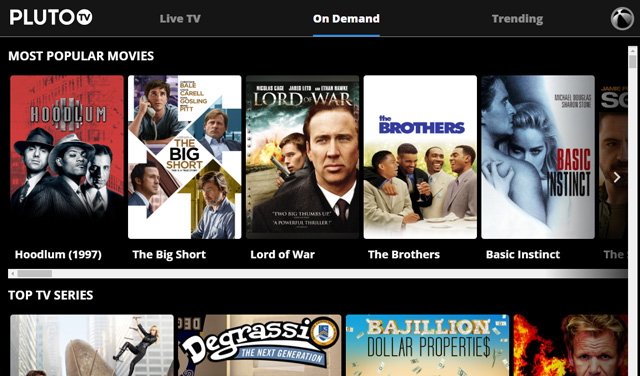
Supported devices include iOS and Android devices, Apple TV, Amazon Fire TV, Roku, Chromecast and gaming consoles.Pluto TVPluto TV gives viewers access to many of the top current and old TV shows, but of course, content is limited. Not all episodes of the shows available for streaming on this service will necessarily be available.
On-demand shows on hand include Degrassi The Next GenerationHell's Kitchen, Discovery Channel's American Chopper, Animal Planet's River MonstersAnthony Bourdain: No Reservations, and TLC's Family S.O.S with Jo Frost. There are also streaming channels, which include Nick and Nick Jr., SciFi, People TV, Fox Sports, Comedy Central, CNN, CBSN, Cheddar News and more. Movies include Raging BullThe African QueenAlpha and OmegaStarman, The Big Short,  and  Fist of Fury.
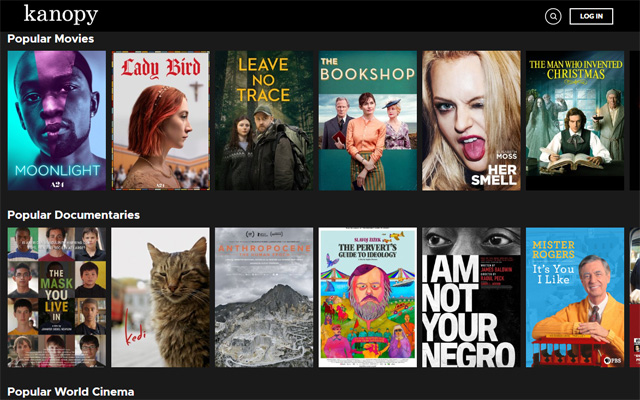
You can watch for free on iOS and Android devices as well as Roku, Apple TV, Amazon Fire TV, Android TV, Chromecast, Smart TVs (Samsung, Sony and Vizio), and your computer.KanopyKanopy markets its content as “thoughtful entertainment” and its collection as “the world’s finest cinema.” As far as diversity, it’s hard to compete with Kanopy’s. It’s got everything from movies to documentaries to “The Great Courses” educational videos.
This streaming service, which originated in Western Australia, was created for public libraries, educational institutions and universities all over the world. It also claims to stream more than 26,000 films, many of them obscure titles you’d be hard-pressed to find anywhere else. And as long as you have a public library membership or belong to an educational institution that has a partnership with Kanopy, you have access to all of them.
Examples of movies on the site are foreign films like BreathlessThe 400 Blows and The Girl with the Dragon Tattoo, thrillers like Memento, black comedies like The Little Shop of Horrors, and documentaries such as Life Off Grid, Being Serena, and The Future of Work and Death.
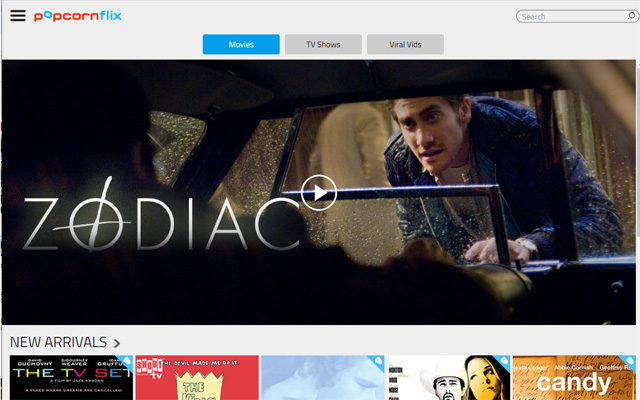
You can stream Kanopy content on iOS and Android devices, Apple TV, Roku, Amazon Fire TV and Chromecast.PopcornflixTrue to its name, Popcornflix is all about the movies — more than 1,500 movies. It’s not as big as Netflix or even Crackle, mind you. But it does its best to deliver entertainment in different genres and boasts some pretty enjoyable, if lesser-known or older, films. If you need a break from motion pictures, Popcornflix also has some TV series and webisodes on its roster. All for free.
Star Trek VIII - First ContactBad News BearsNight of the Living Dead, and Serpico are some of the most popular titles it offers currently. The shows aren’t the most popular and the selection isn’t that big, but kids might enjoy the old school cartoon selection and reality TV buffs might find something on their short list.
The reason its content is a little limited is that Popcornflix mostly streams videos from Screen Media's library, which includes only independent films. It relies on ad support to offer free viewing. The great thing about this service is that you won’t have to sign up for a membership to watch anything.
Supported devices include Apple TV, Roku, Xbox, Amazon Fire TV and iOS and Android devices.Tubi TVIt takes less than a second to sign up for a Tubi TV account. In exchange, you get completely free access to over 50,000 movies from big film/entertainment companies Paramount Pictures, Metro-Goldwyn-Mayer, Starz, and Lionsgate. Tubi TV boasts blockbusters, award-winning or nominated films, indie flicks and classics.
Minority ReportCatch Me if You CanAll Dogs Go to Heaven, and One Punch Man are some of the titles currently on offer. Excellent documentaries and popular TV shows are also available: Hell's KitchenDuck DynastyAnger Management, and 3rd Rock from the Sun are among many on the list. To compete with Netflix, Tubi has a category called Not on Netflix, which includes movies and shows like Unsolved MysteriesThe DictatorThe Bachelor, and The Running Man.
To provide free viewing, Tubi relies on ads, investments and content partnerships. Outside the US, it also serves Mexico and Canada.
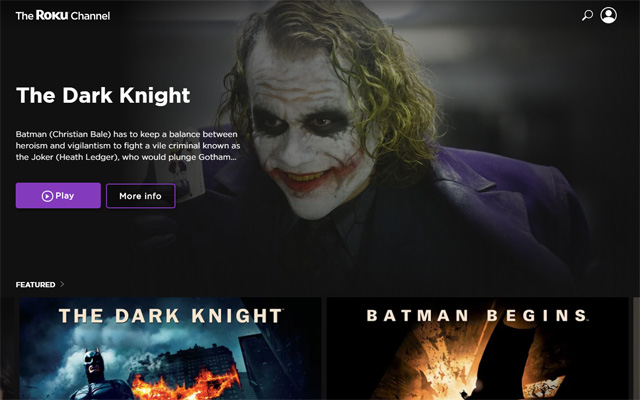
Besides iOS and Android devices, Tubi is also available on Apple TV, Roku, Amazon Fire TV, TiVo, Chromecast, Smart TVs (Samsung, Sony and Vizio) and gaming consoles.The Roku ChannelRoku Channel is another good ad-supported streaming service. It’s subscription- and login-free and its content comes complimentary with your Roku device.
Thanks to its strong partnerships with studios and content publishers, this service offers 10,000 plus Hollywood movies and shows. Featured films for January include The Dark KnightThe Joy Luck ClubContact and Cloudy with a Chance of Meatballs 2. There are also TVs shows, like Without a TraceSchitt$ Creek, and Food CIA, as well as streaming shows like ABC News, This Old House, and Food52. and To keep its viewers updated on new content, Roku routinely releases new stuff.
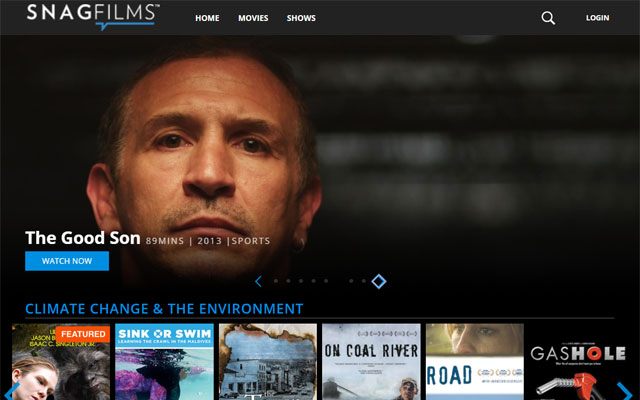
The service is available on iOS and Android devices, laptops, and, of course, Roku devices.SnagFilmsWith very niche content, SnagFilms isn’t as popular as the other free streaming services. However, it’s a great resource for folks who enjoy documentary-type movies and shows. Here’s where you go if you’re looking for a more cerebral form of entertainment.
This service’s selling point is that it showcases philanthropic, thought-provoking and educational videos — more than 2,000 of them — for free. And you need not set up an account, though having one lets you create a watchlist and track your viewing history. Current great features include Yoga, Inc.We the People: The Market Basket Effect and The Good Son.
Ad-supported SnagFilms managed to secure such an amazing library of harder-to-find titles through partnerships and affiliations with web companies, nonprofits and special interest sites.
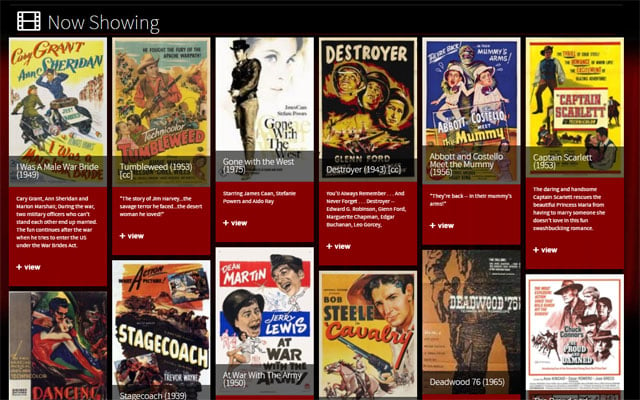
The service is available iOS and Android devices  Roku, Apple TV, Amazon Fire TV, Chromecast, Smart TVs and gaming consoles.Classic Cinema OnlineWhile we’re on the subject of specialized streaming services, we need to talk about Classic Cinema Online. This site offers viewers old, classic and even silent movies for free and without membership or registration.
There are a couple of snags: The movie quality isn’t the best — don’t expect high-definition here — and the selection is limited. But the modest library does span several genres including animated, comedy, drama, Western, sci-fi and musical. Episodes of some old TV shows are also available.
Current movies and shows in the showcase include Abbot and Costello Meet FrankensteinPinocchioThe Little Shop of HorrorsCurly Top, and Roy Rogers and The Arizona Kid.
Classic Cinema Online is only available on computers.
To set up these streaming services on your TV, check out our guide to the best streaming devices.
Updated on 1/20/2020
[Image credit: family watching TV via BigStockPhoto, Crackle, Kanopy, Popcornflix, Tube TV, Roku, Pluto TV, SnagFilms, Classic Cinema Online]

ThopTV

Crackle

Pluto TV

Kanopy

Popcornflix

Tubi TV

The Roku Channel

SnagFilms

Classic Cinema Online


Making a Kali Bootable USB Drive in Windows , Mac and Linux 2021

Making a Kali Bootable USB Drive in Windows , Mac and Linux 2021


Our favourite way, and the fastest method, for getting up and running with Kali Linux is to run it “live” from a USB drive. This method has several advantages:

  • It’s non-destructive — it makes no changes to the host system’s hard drive or installed OS, and to go back to normal operations, you simply remove the “Kali Live” USB drive and restart the system.
  • It’s portable — you can carry Kali Linux in your pocket and have it running in minutes on an available system
  • It’s customizable — you can roll your own custom Kali Linux ISO image and put it onto a USB drive using the same procedures
  • It’s potentially persistent — with a bit of extra effort, you can configure your Kali Linux “live” USB drive to have persistent storage, so the data you collect is saved across reboots

In order to do this, we first need to create a bootable USB drive which has been set up from an ISO image of Kali Linux.

Windows

What You’ll Need for Windows 

  1. verified copy of the appropriate ISO image of the latest Kali build image for the system you’ll be running it on: see the details on downloading official Kali Linux images.

  2. If you’re running under Windows, there is not one tool that is considered the overall best for imaging. We recommend Etcher, however Rufus  https://rufus.ie/

  3. is another popular option. If one does not work for you, consider the other.

  4. A USB thumb drive, 4GB or larger. (Systems with a direct SD card slot can use an SD card with similar capacity. The procedure is identical.)

Kali Linux Live USB Install Procedure

The specifics of this procedure will vary depending on whether you’re doing it on a WindowsLinux, or macOS/OS X system.

Creating a Bootable Kali USB Drive on Windows (Etcher)

  1. Plug your USB drive into an available USB port on your Windows PC, note which drive designator (e.g. “F:\“) it uses once it mounts, and launch Etcher.

  2. Choose the Kali Linux ISO file to be imaged with “select image” and verify that the USB drive to be overwritten is the correct one. Click the “Flash!” button once ready.

3. Once Etcher alerts you that the image has been flashed, you can safely remove the USB drive and proceed to boot into Kali with it.


macOS/OS X 


What You’ll Need

  1. verified copy of the appropriate ISO image of the latest Kali build image for the system you’ll be running it on: see the details on downloading official Kali Linux images.

  2. If you’re running under macOS/OS X, you can use the dd command, which is pre-installed on those platforms, or use Etcher.

  3. A USB thumb drive, 4GB or larger. (Systems with a direct SD card slot can use an SD card with similar capacity. The procedure is identical.)

Kali Linux Live USB Install Procedure

The specifics of this procedure will vary depending on whether you’re doing it on a WindowsLinux, or macOS/OS X system.

Creating a Bootable Kali USB Drive on macOS/OS X (DD)

macOS/OS X is based on UNIX, so creating a bootable Kali Linux USB drive in an macOS/OS X environment is similar to doing it on Linux. Once you’ve downloaded and verified your chosen Kali ISO file, you use dd to copy it over to your USB stick. If you would prefer to use Etcher, then follow the same directions as a Windows user. Note that the USB drive will have a path similar to /dev/disk2.

WARNING: Although the process of imaging Kali on a USB drive is very easy, you can just as easily overwrite a disk drive you didn't intend to with dd if you do not understand what you are doing, or if you specify an incorrect output path. Double-check what you're doing before you do it, it'll be too late afterwards. Consider yourself warned.

  1. Without the USB drive plugged into the system, open a Terminal window, and type the command diskutil list at the command prompt.

  2. You will get a list of the device paths (looking like /dev/disk0/dev/disk1, etc.) of the disks mounted on your system, along with information on the partitions on each of the disks.

3. Plug in your USB device to your Apple computer’s USB port and run the command diskutil list a second time. Your USB drive’s path will most likely be the last one. In any case, it will be one which wasn’t present before. In this example, you can see that there is now a /dev/disk6 which wasn’t previously present.

4. Unmount the drive (assuming, for this example, the USB stick is /dev/disk6 — do not simply copy this, verify the correct path on your own system!):

% diskutil unmountDisk /dev/disk6
  1. Proceed to (carefully!) image the Kali ISO file on the USB device. The following command assumes that your USB drive is on the path /dev/disk6, and you’re in the same directory with your Kali Linux ISO, which is named “kali-linux-2020.2-live-amd64.iso”. We will replace /dev/disk6 with /dev/rdisk6 to improve the write speeds:

    % sudo dd if=kali-linux-2020.2-live-amd64.iso of=/dev/rdisk6 bs=4m

Increasing the blocksize (bs) will speed up the write progress, but will also increase the chances of creating a bad USB stick. Using the given value on macOS/OS X has produced reliable images consistently.

Imaging the USB drive can take a good amount of time, over half an hour is not unusual, as the sample output below shows. Be patient!

The dd command provides no feedback until it’s completed, but if your drive has an access indicator, you’ll probably see it flickering from time to time. The time to dd the image across will depend on the speed of the system used, USB drive itself, and USB port it’s inserted into. Once dd has finished imaging the drive, it will output something that looks like this:

2911+1 records in
2911+1 records out
3053371392 bytes transferred in 2151.132182 secs (1419425 bytes/sec)

And that’s it!


Creating a Bootable Kali USB Drive on macOS/OS X (Etcher)

Alternatively, Etcher can be used.

  1. Download and run Etcher.

  2. Choose the Kali Linux ISO file to be imaged with “select image” and verify that the USB drive to be overwritten is the correct one. Click the “Flash!” button once ready.

3. Once Etcher alerts you that the image has been flashed, you can safely remove the USB drive.

You can now boot into a Kali Live / Installer environment using the USB device.
To boot from an alternate drive on an macOS/OS X system, bring up the boot menu by pressing the Option key immediately after powering on the device and select the drive you want to use.

For more information, see Apple’s knowledge base.


LINUX


What You’ll Need for Linux

  1. verified copy of the appropriate ISO image of the latest Kali build image for the system you’ll be running it on: see the details on downloading official Kali Linux images.

  2. If you’re running under Linux, you can use the dd command, which is pre-installed, or use Etcher.

  3. A USB thumb drive, 4GB or larger. (Systems with a direct SD card slot can use an SD card with similar capacity. The procedure is identical.)

Kali Linux Live USB Install Procedure

The specifics of this procedure will vary depending on whether you’re doing it on a WindowsLinux, or macOS/OS X system.

Creating a Bootable Kali USB Drive on Linux (DD)

Creating a bootable Kali Linux USB key in a Linux environment is easy. Once you’ve downloaded and verified your Kali ISO file, you can use the dd command to copy it over to your USB stick using the following procedure. Note that you’ll need to be running as root, or to execute the dd command with sudo. The following example assumes a Linux Mint 17.1 desktop — depending on the distro you’re using, a few specifics may vary slightly, but the general idea should be very similar. If you would prefer to use Etcher, then follow the same directions as a Windows user. Note that the USB drive will have a path similar to /dev/sdb.

WARNING: Although the process of imaging Kali Linux onto a USB drive is very easy, you can just as easily overwrite a disk drive you didn't intend to with dd if you do not understand what you are doing, or if you specify an incorrect output path. Double-check what you're doing before you do it, it'll be too late afterwards. Consider yourself warned.

  1. First, you’ll need to identify the device path to use to write the image to your USB drive. Without the USB drive inserted into a port, execute the command sudo fdisk -l at a command prompt in a terminal window (if you don’t use elevated privileges with fdisk, you won’t get any output). You’ll get output that will look something (not exactly) like this, showing a single drive — “/dev/sda” — containing three partitions (/dev/sda1, /dev/sda2, and /dev/sda5):

2. Now, plug your USB drive into an available USB port on your system, and run the same command, “sudo fdisk -l” a second time. Now, the output will look something (again, not exactly) like this, showing an additional device which wasn’t there previously, in this example “/dev/sdb”, a 16GB USB drive:

3. Proceed to (carefully!) image the Kali ISO file on the USB device. The example command below assumes that the ISO image you’re writing is named “kali-linux-2020.2-live-amd64.iso” and is in your current working directory. The blocksize parameter can be increased, and while it may speed up the operation of the dd command, it can occasionally produce unbootable USB drives, depending on your system and a lot of different factors. The recommended value, “bs=4M”, is conservative and reliable.

dd if=kali-linux-2020.2-live-amd64.iso of=/dev/sdb bs=4M

Imaging the USB drive can take a good amount of time, over ten minutes or more is not unusual, as the sample output below shows. Be patient!

The dd command provides no feedback until it’s completed, but if your drive has an access indicator, you’ll probably see it flickering from time to time. The time to dd the image across will depend on the speed of the system used, USB drive itself, and USB port it’s inserted into. Once dd has finished imaging the drive, it will output something that looks like this:

5823+1 records in
5823+1 records out
3053371392 bytes (3.1 GB) copied, 746.211 s, 4.1 MB/s

That’s it, really!


Creating a Bootable Kali USB Drive on Linux (DD with status)

Alternatively there are a few other options available for imaging.

The first option is dd with a status indicator. This is only available on newer systems however. To do this, we simply add the status flag.

dd if=kali-linux-2020.2-live-amd64.iso of=/dev/sdb bs=4M status=progress

Another option is to use pv. We can also use the size flag here to get an approximate timer. Change the size depending on the image being used.

dd if=kali-linux-2020.2-live-amd64.iso | pv -s 2.8G | dd of=/dev/sdb bs=4M

Creating a Bootable Kali USB Drive on Linux (Etcher)

The third is Etcher.

  1. Download and run Etcher.

  2. Choose the Kali Linux ISO file to be imaged with “select image” and verify that the USB drive to be overwritten is the correct one. Click the “Flash!” button once ready.

3. Once Etcher alerts you that the image has been flashed, you can safely remove the USB drive.

You can now boot into a Kali Live / Installer environment using the USB device.


Making a Kali Bootable USB Drive in Windows , Mac and Linux 2021

Making a Kali Bootable USB Drive in Windows , Mac and Linux 2021


Our favourite way, and the fastest method, for getting up and running with Kali Linux is to run it “live” from a USB drive. This method has several advantages:

  • It’s non-destructive — it makes no changes to the host system’s hard drive or installed OS, and to go back to normal operations, you simply remove the “Kali Live” USB drive and restart the system.
  • It’s portable — you can carry Kali Linux in your pocket and have it running in minutes on an available system
  • It’s customizable — you can roll your own custom Kali Linux ISO image and put it onto a USB drive using the same procedures
  • It’s potentially persistent — with a bit of extra effort, you can configure your Kali Linux “live” USB drive to have persistent storage, so the data you collect is saved across reboots

In order to do this, we first need to create a bootable USB drive which has been set up from an ISO image of Kali Linux.

Windows

What You’ll Need for Windows 

  1. verified copy of the appropriate ISO image of the latest Kali build image for the system you’ll be running it on: see the details on downloading official Kali Linux images.

  2. If you’re running under Windows, there is not one tool that is considered the overall best for imaging. We recommend Etcher, however Rufus  https://rufus.ie/

  3. is another popular option. If one does not work for you, consider the other.

  4. A USB thumb drive, 4GB or larger. (Systems with a direct SD card slot can use an SD card with similar capacity. The procedure is identical.)

Kali Linux Live USB Install Procedure

The specifics of this procedure will vary depending on whether you’re doing it on a WindowsLinux, or macOS/OS X system.

Creating a Bootable Kali USB Drive on Windows (Etcher)

  1. Plug your USB drive into an available USB port on your Windows PC, note which drive designator (e.g. “F:\“) it uses once it mounts, and launch Etcher.

  2. Choose the Kali Linux ISO file to be imaged with “select image” and verify that the USB drive to be overwritten is the correct one. Click the “Flash!” button once ready.

3. Once Etcher alerts you that the image has been flashed, you can safely remove the USB drive and proceed to boot into Kali with it.


macOS/OS X 


What You’ll Need

  1. verified copy of the appropriate ISO image of the latest Kali build image for the system you’ll be running it on: see the details on downloading official Kali Linux images.

  2. If you’re running under macOS/OS X, you can use the dd command, which is pre-installed on those platforms, or use Etcher.

  3. A USB thumb drive, 4GB or larger. (Systems with a direct SD card slot can use an SD card with similar capacity. The procedure is identical.)

Kali Linux Live USB Install Procedure

The specifics of this procedure will vary depending on whether you’re doing it on a WindowsLinux, or macOS/OS X system.

Creating a Bootable Kali USB Drive on macOS/OS X (DD)

macOS/OS X is based on UNIX, so creating a bootable Kali Linux USB drive in an macOS/OS X environment is similar to doing it on Linux. Once you’ve downloaded and verified your chosen Kali ISO file, you use dd to copy it over to your USB stick. If you would prefer to use Etcher, then follow the same directions as a Windows user. Note that the USB drive will have a path similar to /dev/disk2.

WARNING: Although the process of imaging Kali on a USB drive is very easy, you can just as easily overwrite a disk drive you didn't intend to with dd if you do not understand what you are doing, or if you specify an incorrect output path. Double-check what you're doing before you do it, it'll be too late afterwards. Consider yourself warned.

  1. Without the USB drive plugged into the system, open a Terminal window, and type the command diskutil list at the command prompt.

  2. You will get a list of the device paths (looking like /dev/disk0/dev/disk1, etc.) of the disks mounted on your system, along with information on the partitions on each of the disks.

3. Plug in your USB device to your Apple computer’s USB port and run the command diskutil list a second time. Your USB drive’s path will most likely be the last one. In any case, it will be one which wasn’t present before. In this example, you can see that there is now a /dev/disk6 which wasn’t previously present.

4. Unmount the drive (assuming, for this example, the USB stick is /dev/disk6 — do not simply copy this, verify the correct path on your own system!):

% diskutil unmountDisk /dev/disk6
  1. Proceed to (carefully!) image the Kali ISO file on the USB device. The following command assumes that your USB drive is on the path /dev/disk6, and you’re in the same directory with your Kali Linux ISO, which is named “kali-linux-2020.2-live-amd64.iso”. We will replace /dev/disk6 with /dev/rdisk6 to improve the write speeds:

    % sudo dd if=kali-linux-2020.2-live-amd64.iso of=/dev/rdisk6 bs=4m

Increasing the blocksize (bs) will speed up the write progress, but will also increase the chances of creating a bad USB stick. Using the given value on macOS/OS X has produced reliable images consistently.

Imaging the USB drive can take a good amount of time, over half an hour is not unusual, as the sample output below shows. Be patient!

The dd command provides no feedback until it’s completed, but if your drive has an access indicator, you’ll probably see it flickering from time to time. The time to dd the image across will depend on the speed of the system used, USB drive itself, and USB port it’s inserted into. Once dd has finished imaging the drive, it will output something that looks like this:

2911+1 records in
2911+1 records out
3053371392 bytes transferred in 2151.132182 secs (1419425 bytes/sec)

And that’s it!


Creating a Bootable Kali USB Drive on macOS/OS X (Etcher)

Alternatively, Etcher can be used.

  1. Download and run Etcher.

  2. Choose the Kali Linux ISO file to be imaged with “select image” and verify that the USB drive to be overwritten is the correct one. Click the “Flash!” button once ready.

3. Once Etcher alerts you that the image has been flashed, you can safely remove the USB drive.

You can now boot into a Kali Live / Installer environment using the USB device.

To boot from an alternate drive on an macOS/OS X system, bring up the boot menu by pressing the Option key immediately after powering on the device and select the drive you want to use.

For more information, see Apple’s knowledge base.


LINUX


What You’ll Need for Linux

  1. verified copy of the appropriate ISO image of the latest Kali build image for the system you’ll be running it on: see the details on downloading official Kali Linux images.

  2. If you’re running under Linux, you can use the dd command, which is pre-installed, or use Etcher.

  3. A USB thumb drive, 4GB or larger. (Systems with a direct SD card slot can use an SD card with similar capacity. The procedure is identical.)

Kali Linux Live USB Install Procedure

The specifics of this procedure will vary depending on whether you’re doing it on a WindowsLinux, or macOS/OS X system.

Creating a Bootable Kali USB Drive on Linux (DD)

Creating a bootable Kali Linux USB key in a Linux environment is easy. Once you’ve downloaded and verified your Kali ISO file, you can use the dd command to copy it over to your USB stick using the following procedure. Note that you’ll need to be running as root, or to execute the dd command with sudo. The following example assumes a Linux Mint 17.1 desktop — depending on the distro you’re using, a few specifics may vary slightly, but the general idea should be very similar. If you would prefer to use Etcher, then follow the same directions as a Windows user. Note that the USB drive will have a path similar to /dev/sdb.

WARNING: Although the process of imaging Kali Linux onto a USB drive is very easy, you can just as easily overwrite a disk drive you didn't intend to with dd if you do not understand what you are doing, or if you specify an incorrect output path. Double-check what you're doing before you do it, it'll be too late afterwards. Consider yourself warned.

  1. First, you’ll need to identify the device path to use to write the image to your USB drive. Without the USB drive inserted into a port, execute the command sudo fdisk -l at a command prompt in a terminal window (if you don’t use elevated privileges with fdisk, you won’t get any output). You’ll get output that will look something (not exactly) like this, showing a single drive — “/dev/sda” — containing three partitions (/dev/sda1, /dev/sda2, and /dev/sda5):

2. Now, plug your USB drive into an available USB port on your system, and run the same command, “sudo fdisk -l” a second time. Now, the output will look something (again, not exactly) like this, showing an additional device which wasn’t there previously, in this example “/dev/sdb”, a 16GB USB drive:

3. Proceed to (carefully!) image the Kali ISO file on the USB device. The example command below assumes that the ISO image you’re writing is named “kali-linux-2020.2-live-amd64.iso” and is in your current working directory. The blocksize parameter can be increased, and while it may speed up the operation of the dd command, it can occasionally produce unbootable USB drives, depending on your system and a lot of different factors. The recommended value, “bs=4M”, is conservative and reliable.

dd if=kali-linux-2020.2-live-amd64.iso of=/dev/sdb bs=4M

Imaging the USB drive can take a good amount of time, over ten minutes or more is not unusual, as the sample output below shows. Be patient!

The dd command provides no feedback until it’s completed, but if your drive has an access indicator, you’ll probably see it flickering from time to time. The time to dd the image across will depend on the speed of the system used, USB drive itself, and USB port it’s inserted into. Once dd has finished imaging the drive, it will output something that looks like this:

5823+1 records in
5823+1 records out
3053371392 bytes (3.1 GB) copied, 746.211 s, 4.1 MB/s

That’s it, really!


Creating a Bootable Kali USB Drive on Linux (DD with status)

Alternatively there are a few other options available for imaging.

The first option is dd with a status indicator. This is only available on newer systems however. To do this, we simply add the status flag.

dd if=kali-linux-2020.2-live-amd64.iso of=/dev/sdb bs=4M status=progress

Another option is to use pv. We can also use the size flag here to get an approximate timer. Change the size depending on the image being used.

dd if=kali-linux-2020.2-live-amd64.iso | pv -s 2.8G | dd of=/dev/sdb bs=4M

Creating a Bootable Kali USB Drive on Linux (Etcher)

The third is Etcher.

  1. Download and run Etcher.

  2. Choose the Kali Linux ISO file to be imaged with “select image” and verify that the USB drive to be overwritten is the correct one. Click the “Flash!” button once ready.

3. Once Etcher alerts you that the image has been flashed, you can safely remove the USB drive.

You can now boot into a Kali Live / Installer environment using the USB device.