Friday, August 7, 2020

how to import multiple images as layer in PhotoShop 2021 in Just a minutES

how to import multiple images as layer in PhotoShop 2021 in Just a minutES 


Learn how easy it is to open multiple images at once into a Photoshop document, with each image placed on its own layer, and how to add more images to the document as you need them!
Written by Steve Patterson.
Whether we're compositing images, creating collages or designing layouts, we often need to load multiple images into the same Photoshop document. And each image needs to appear on its own layer within that document. But that's not how Photoshop works when we open multiple files. Instead, each file opens in its own separate document, forcing us to move the images ourselves from one document to another.
But there is a way to open multiple images at once into the same document using a command called Load Layers into Stack. And we can add more files to the document as we need them using a different command known as Place Embedded. In this tutorial, I'll show you how both of these features work. We'll also look at a few options in Photoshop's Preferences that make placing images into your document even faster. And as a bonus, I'll finish things off by blending my images into a simple double exposure effect.
I'm using Photoshop CC 2020 but you can follow along with any recent version.
This tutorial is lesson 6 in our Layers Learning Guide. Let's get started!

How to load multiple images as layers in Photoshop

Let's start by learning how to load multiple images as layers into the same Photoshop document. For that, we use a command called Load Files into Stack. And not only does this command load your images, but it even creates the Photoshop document for you! Here's how to use it.

Step 1: Choose "Load Files into Stack"

In Photoshop, go up to the File menu in the Menu Bar, choose Scripts, and then choose Load Files into Stack:
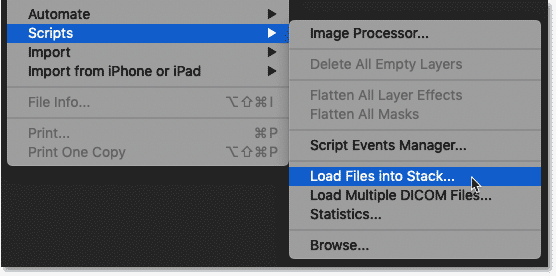
Selecting the Load Files into Stack command in Photoshop
Going to File > Scripts > Load Files into Stack.

Step 2: Select your images

Then in the Load Layers dialog box, set the Use option to either Files or Folder. Files lets you select individual images within a folder, while Folder will load every image in the folder you select. I'll choose Files.
Then click the Browse button:
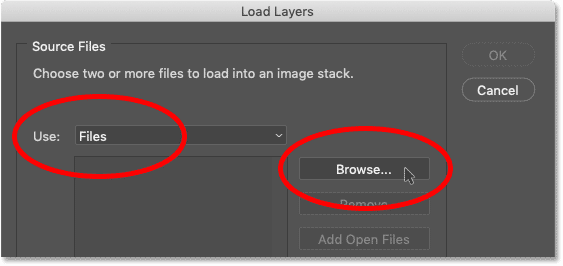
Setting the Use option to either Files or Folder and clicking Browse in Photoshop's Load Layers dialog box
Setting Use to either Files or Folder and then clicking Browse.

Cloud documents or local files

If you're using Photoshop CC 2020 or later, Photoshop may ask if you want to load a Cloud document or files stored on your computer. I'll click the On your computer button:
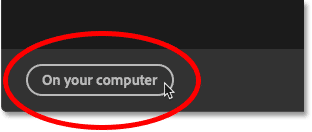
Clicking the On You Computer button to load local files into Photoshop
Choosing to load files on my computer.

Selecting your images

Then navigate to the folder that holds your images and choose the files you need. In my case, I'll select all three images in the folder.
Notice the names of my images. We have "texture.jpg", "portrait.jpg" and "sunset.jpg". Photoshop will use these names when naming the layers, so it's a good idea to rename your files first.
Once you have selected the images, click Open:
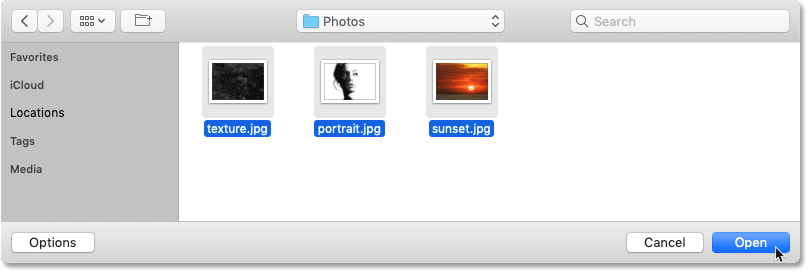
Selecting the images to load into Photoshop
Selecting the images to load into Photoshop.
And back in the Load Layers dialog box, the name of each file appears in the list:
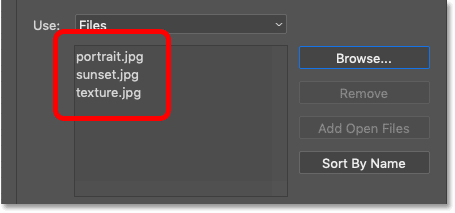
Photoshop's Load Layers dialog box listing the names of the images that will be loaded
The names of the images that will be loaded into Photoshop.

How to remove an image

If you selected an image by mistake and need to remove it, click on its name in the list and then click the Remove button:
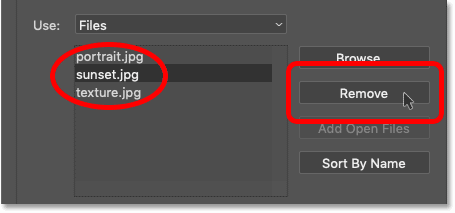
Selecting an image to remove in Photoshop's Load Layers dialog box
You can remove any images you don't need.

Step 3: Click OK

Leave the two options at the bottom of the dialog box ("Attempt to Automatically Align Source Images" and "Create Smart Object after Loading Layers") unchecked.
Then click OK to load your images:
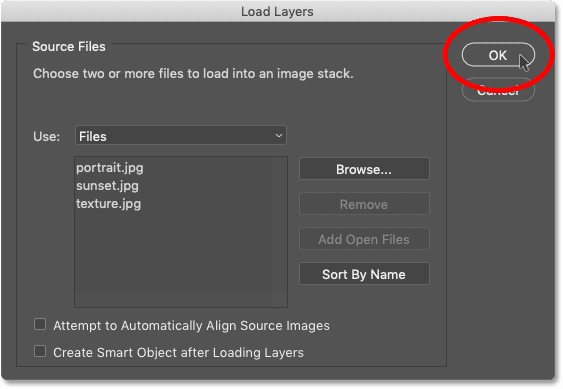
Clicking OK to load the images into Photoshop and close the Load Layers dialog box
Clicking OK to load the files.
Photoshop creates a new document, and after a few seconds, the images are placed into it:
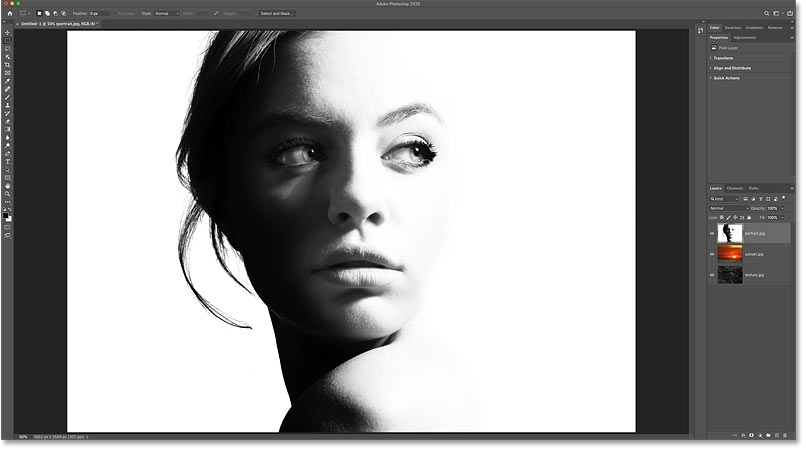
A new Photoshop document is created to hold the images
A new Photoshop document is created.
And in the Layers panel, each of your selected images appears on its own layer, with each layer named after the name of the file:
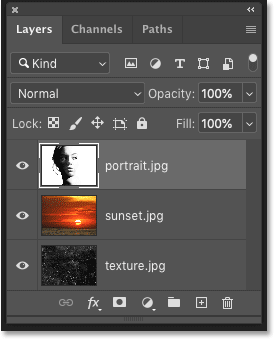
The Layers panel showing all images loaded as layers in Photoshop
The Layers panel showing each image on its own layer.
You can turn each layer on or off by clicking its visibility icon:
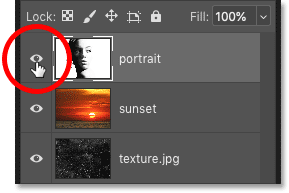
Clicking the layer visibility icons in Photoshop's Layers panel to show or hide the images
Use the visibility icons to show or hide layers.

How to place an image into a Photoshop document

So that's how to create a new Photoshop document and load multiple images into it. Now let's learn how to add more images to the document using the Place Embedded command.
In the Layers panel, I'll delete my "portrait" layer by dragging it down onto the trash bin:
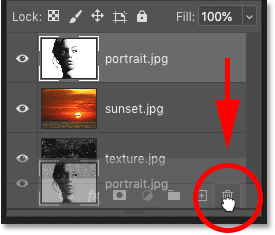
Deleting a layer in Photoshop's Layers panel
Deleting one of the layers.

Step 1: Choose "Place Embedded"

To add a new image to your document, go up to the File menu and choose Place Embedded.
There is also a similar command called Place Linked which will simply link to the file on your computer. But to load the image directly into your document, choose Place Embedded:
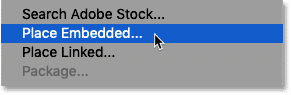
Choosing the Place Embedded command in Photoshop
Going to File > Place Embedded.

Step 2: Select your image

Select the image you want to add to the document and then click Place.
I'll choose my portrait image:
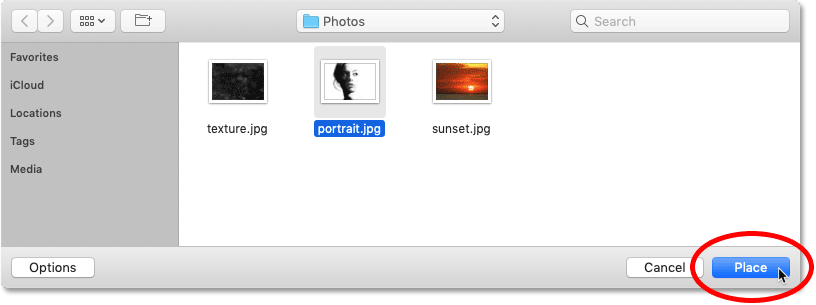
Selecting the image to place into the Photoshop document
Selecting the image to place into the document.

Step 3: Accept and close Free Transform

Now before Photoshop places the image, it first opens the Free Transform command so you can resize the image if needed:
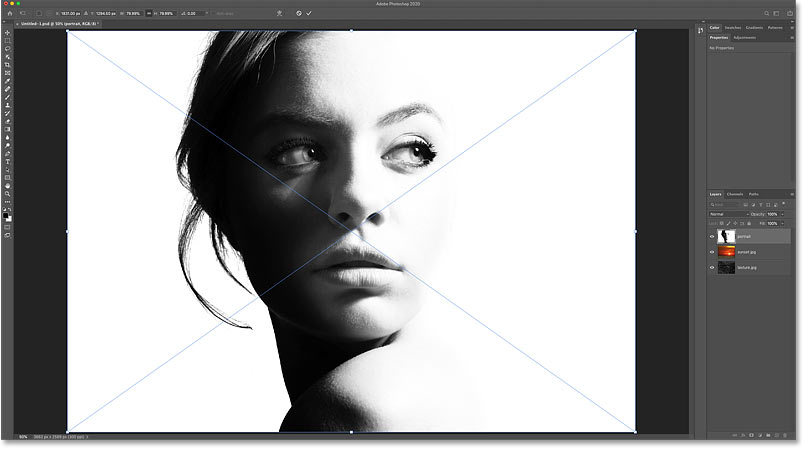
Photoshop opens the Free Transform command before placing the image into the document
Photoshop opens Free Transform before placing the image into the document.
But in most cases, you can just click the checkmark in the Options Bar to accept the current size and close Free Transform. You can also press the Enter (Win) / Return (Mac) key on your keyboard:
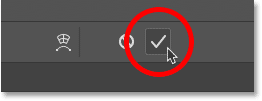
Clicking the checkmark to accept and close Free Transform
Clicking the checkmark.

The image is placed as a smart object

Photoshop places the image into the document. But notice in the Layers panel that the image appears not as a normal layer but as a smart object, indicated by the icon in the lower right of the thumbnail:
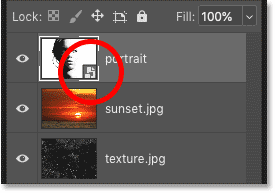
Photoshop's Layers panel showing the image placed as a smart object
Photoshop places the image as a smart object.
Smart objects are very powerful. But they also have limitations, and the biggest one is that a smart object is not directly editable.
For example, I'll select the Rectangular Marquee Tool from the toolbar:
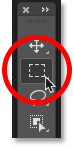
Selecting the Rectangular Marquee Tool in Photoshop's toolbar
Selecting the Rectangular Marquee Tool.
And then I'll drag out a selection around the woman's eyes:
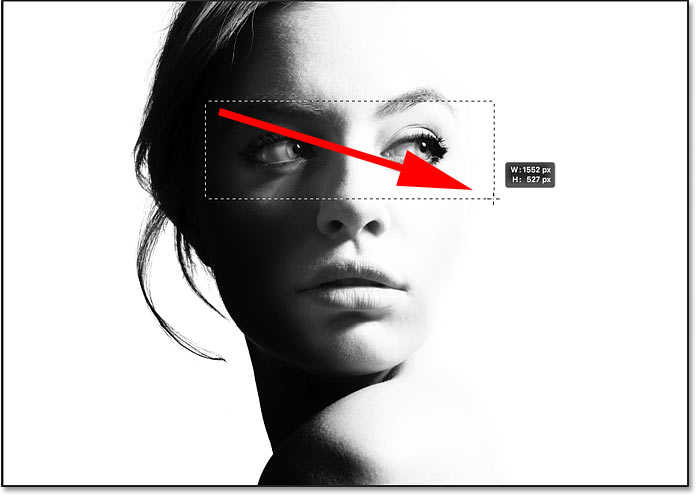
Drawing a rectangular selection around part of the smart object in Photoshop
Selecting part of the smart object.
I'll invert the selection by going up to the Select menu and choosing Inverse:
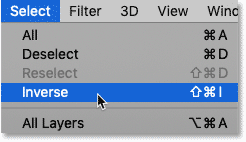
Choosing the Inverse command from the Select menu in Photoshop
Going to Select > Inverse.
And then I'll delete everything around my initial selection by pressing the Backspace (Win) / Delete (Mac) key on my keyboard.
But instead of deleting part of the image, Photoshop displays a warning that it could not complete my request because the smart object is not directly editable. I'll click OK to close it:
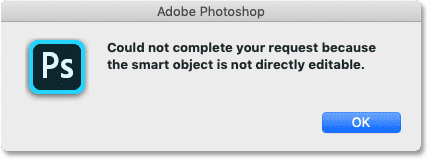
Photoshop's warning that smart objects are not directly editable
Photoshop could not edit the smart object.

How to convert a smart object to a normal layer

So depending on what you'll be doing with the image, a smart object may not be what you want. In that case, you'll need to convert the smart object back into a normal layer after you've placed it into your document.
To do that, right-click (Win) / Control-click (Mac) anywhere in the empty gray area beside the smart object's name:
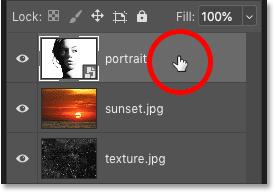
Opening the contextual menu in Photoshop's Layers panel
Right-clicking (Win) / Control-clicking (Mac) in the empty area.
And then choose Rasterize Layer from the menu:
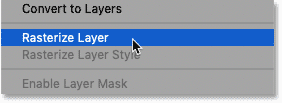
How to rasterize a smart object in Photoshop
Choosing the Rasterize Layer command.
The smart object icon disappears from the thumbnail, and we now have a normal pixel layer:
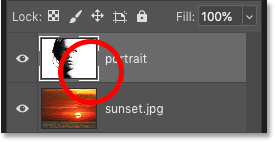
The smart object has been converted to a pixel layer in Photoshop
The smart object has been converted to a pixel layer.
If I press Backspace (Win) / Delete (Mac) on my keyboard, this time Photoshop deletes the selection as expected:
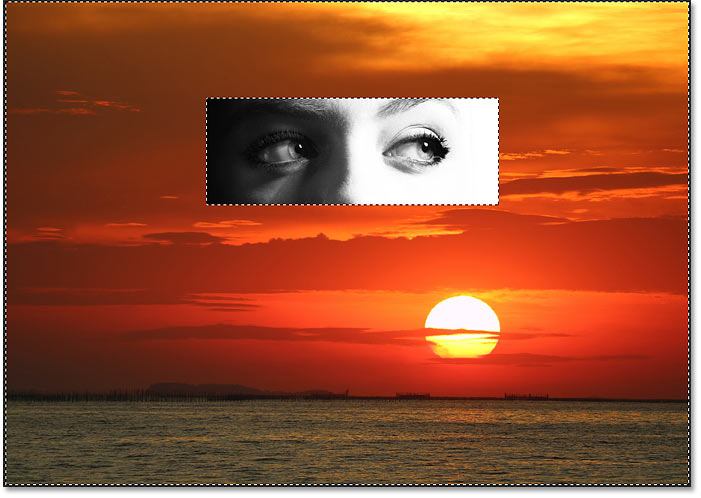
The selection was deleted after converting the smart object to a pixel layer in Photoshop
The selection was deleted after converting the smart object to a pixel layer.

How to make placing images into Photoshop faster

So now that we know how to place an image into a document, let's look at a few options in Photoshop's Preferences that can help you place images even faster.
To open the Preferences on a Windows PC, go up to the Edit menu. On a Mac, go up to the Photoshop menu. From there, choose Preferences and then General:
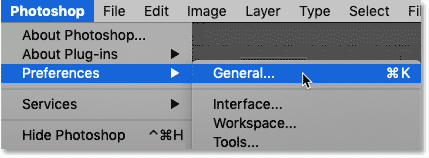
Opening Photoshop's General Preferences
Opening Photoshop's General Preferences.

Skip Transform when Placing

To prevent Photoshop from opening Free Transform every time you place an image, turn on the Skip Transform when Placing option:
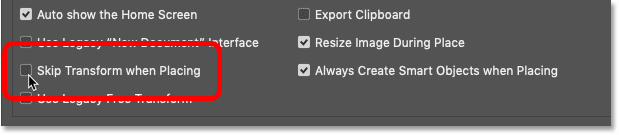
The Skip Transform when Placing option in Photoshop's Preferences
The "Skip Transform when Placing" option.

Always Create Smart Objects when Placing

To stop Photoshop from automatically converting images into smart objects, turn off Always Create Smart Objects when Placing. You can always convert a layer to smart object yourself when you need to:
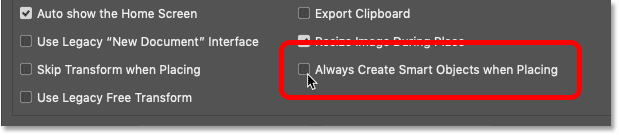
The Always Create Smart Objects when Placing option in Photoshop's Preferences
The "Always Create Smart Objects when Placing" option.

Resize Image During Place

And this third option won't speed things up but it's definitely worth looking at. By default, if you place an image into a document and the image is larger than the canvas size, Photoshop will automatically resize the image to fit the canvas. In other words, it will make your image smaller.
If that's not what you want, and you would rather resize images yourself using Free Transform, then uncheck Resize Image During Place. When you're done, click OK to close the Preferences dialog box:
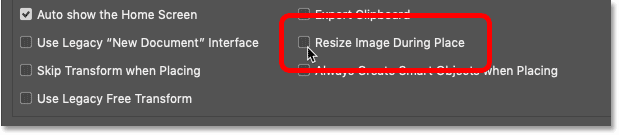
The Resize Image During Place option in Photoshop's Preferences
The "Resize Image During Place" option.

Bonus: Blending the layers to create a double exposure

So we've learned how to load multiple images at once into a Photoshop document using the Load Files into Stack command, and how to add more images using the Place Embedded command. I'll finish off this tutorial by quickly blending my three images together to create a simple double exposure effect.
I'm starting with my portrait image at the top of the layer stack, which makes it the image that's visible in the document:
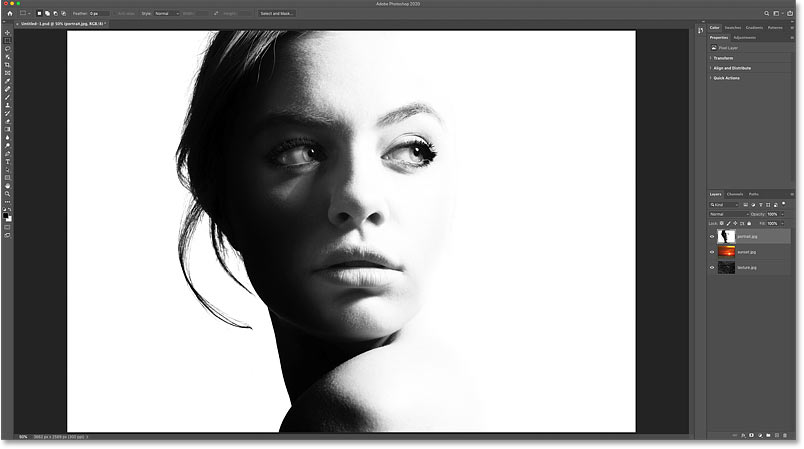
The original portrait image in the Photoshop document. Credit: Adobe Stock
The portrait image. Credit: Adobe Stock.

Moving the sunset layer above the portrait

In the Layers panel, I'll click on my sunset layer and drag it above the portrait layer:
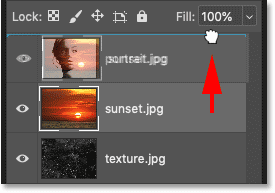
Dragging the suneet layer above the portrait layer in Photoshop's Layers panel
Dragging the sunset above the portrait.
And now my sunset image is visible:
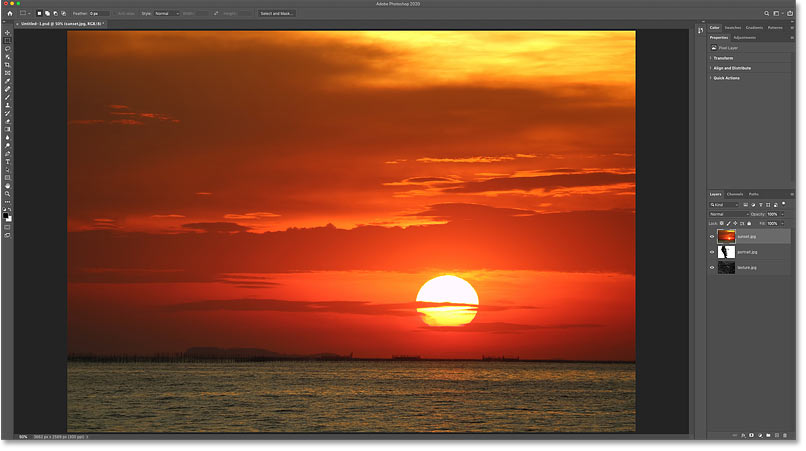
A sunset photo. Credit: Adobe Stock
The sunset image. Credit: Adobe Stock.

Changing the blend mode

To blend the sunset in with the portrait, I'll change the blend mode of the sunset layer from Normal to Screen:
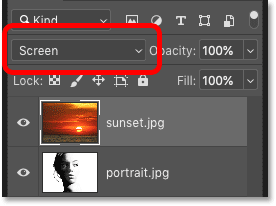
Changing the blend mode of the sunset layer to Screen in Photoshop's Layers panel
Changing the layer's blend mode to Screen.
The Screen blend mode keeps the white areas of the portrait visible and reveals the sunset in the darker areas:
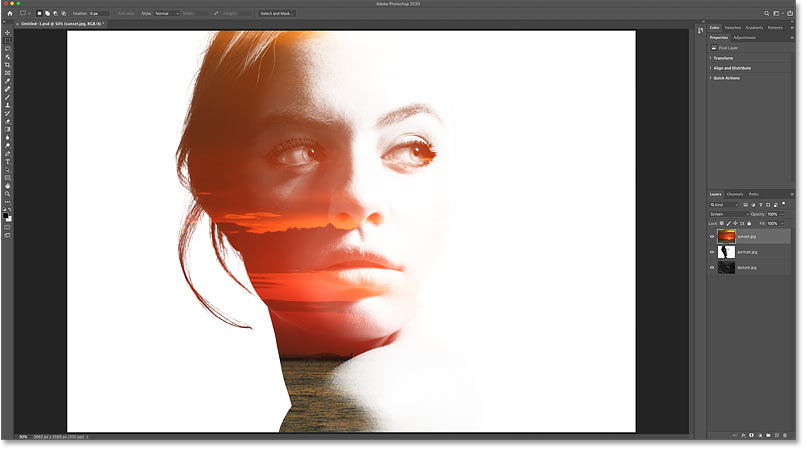
The result after changing the blend mode of the sunset layer to Screen in Photoshop
The result after changing the blend mode of the sunset layer to Screen.

Moving the texture layer above the sunset

Next, I'll drag my texture layer above the sunset layer:
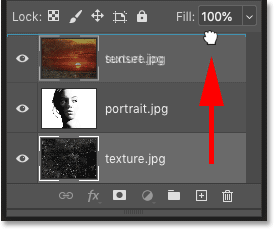
Dragging the texture layer to the top of the layer stack in Photoshop's Layers panel
Dragging the texture layer to the top of the stack.
And now the texture image is visible:
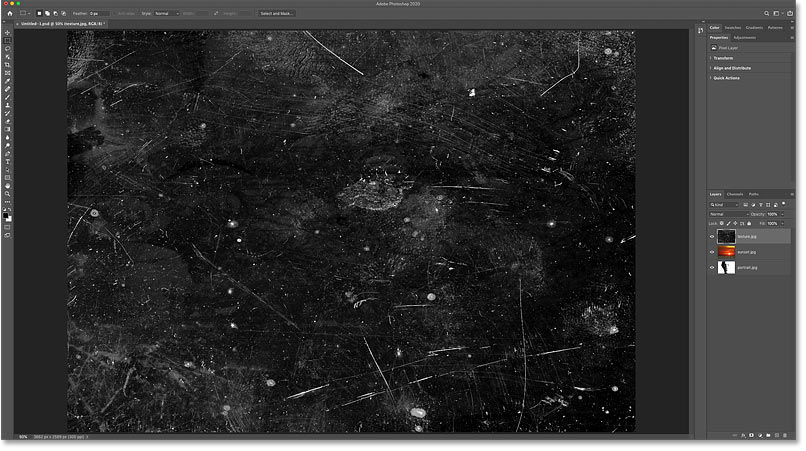
A texture image. Credit: Adobe Stock
The texture image. Credit: Adobe Stock.

Changing the blend mode and layer opacity

To hide the dark areas of the texture and keep only the lighter areas, I'll change its blend mode to Screen.
I'll also lower the layer's Opacity down to around 70%:
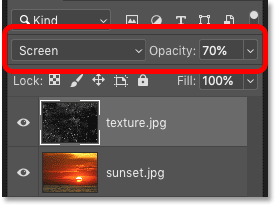
Changing the blend mode and opacity of the texture image in Photoshop's Layers panel
Changing the blend mode and lowering the opacity of the texture.
And here's the result with the texture now blended into the effect:
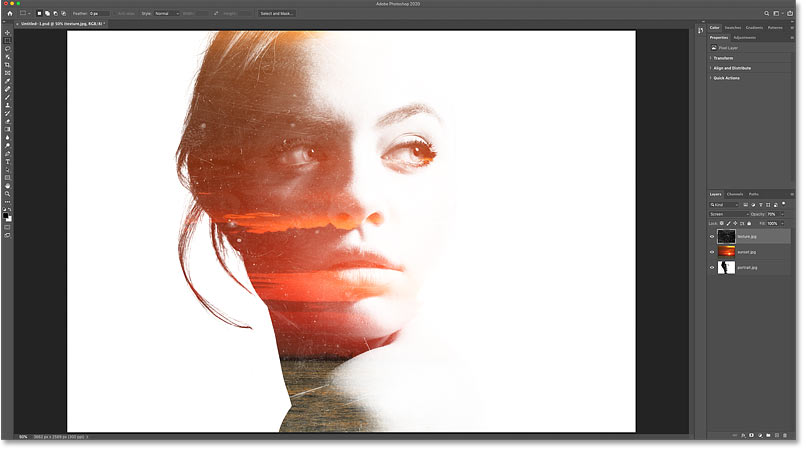
The result after changing the blend mode of the sunset layer to Screen in Photoshop
The result after changing the blend mode of the sunset layer to Screen.

Merging the layers onto a new layer

Finally, to add a bit more contrast to the effect, I'll merge all three layers onto a new layer above them by pressing Shift+Ctrl+Alt+E on a Windows PC, or Shift+Command+Option+E on a Mac:
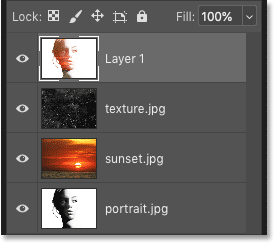
Merging the existing layers onto a new layer in Photoshop's Layers panel
Merging the existing layers onto a new layer.

Increasing the contrast

And then to increase the contrast, I'll go up to the Image menu and I'll choose Auto Contrast:
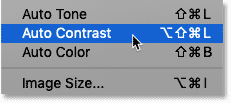
Selecting the Auto Contrast command in Photoshop
Going to Image > Auto Contrast.
And here is my final result:
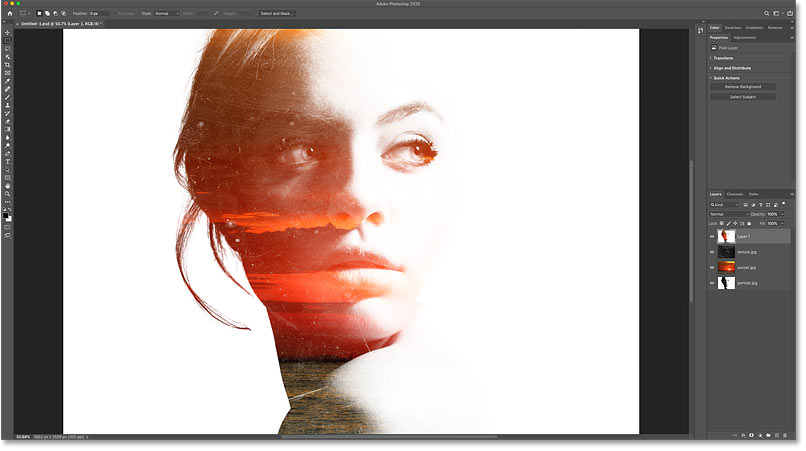
A double exposure effect created in Photoshop
The final double exposure effect.
And there we have it!

How to Reduce Noise in Photoshop | Grains From Photos | Noise Reduction 2021

HOW TO REDUCE NOISE IN PHOTOSHOP 2021

how to reduce noise in photoshop
Do you know how to reduce noise in Photoshop for your wedding photography? In the past, we have covered this process in Lightroom. Today, we will dive into the specific steps needed to reduce noise in Photoshop.
There are several actions you can take to create unforgettable images in Photoshop, as well as Lightroom.

HOW TO REDUCE NOISE IN PHOTOSHOP

Here at ShootDotEdit, we provide wedding photo editing services for professional wedding photographers. We also know it is important for photographers to understand how to perform certain actions on their images. The more you understand post processing software like Photoshop, the easier it becomes to make decisions based on your style and preferences.
As a wedding photographer, chances are you are no stranger to noise in your images. Digital noise is a discoloration of a photo which often degrades the quality. When you zoom in closely on an image, the noise may cause it to appear pixelated. There are several factors which can cause noise in your photos, including low light scenarios, high sensitivity modes, or slow shutter speeds.
Unlike using Lightroom to reduce noise, Photoshop gives you a lot more versatility and refinement. Below we walk through how to perform Photoshop noise reduction.

TYPES OF DIGITAL NOISE

One of the first steps in the process of reducing noise in your images is to identify the type of digital noise. Below, we walk through the different types of noise you may find in your images.

COLOR NOISE

The first type of noise is color noise, which appears when the color is distorted. Color noise appears as a variety of colors instead of a color showing as solid.

LUMINANCE NOISE

The next type of noise is luminance noise, which shows up as grain on your images. Unlike color noise, you will not see the color variations with luminance noise. This type of noise refers to the brightness of the image instead of the colors.

QUICK TIP

Since noise can often be challenging to see when an image is zoomed out, zoom in to help identify which type it is. If you see color distortion on the image, this means it is color noise. If you see black, white, and gray dots, this means it is luminance noise.
Noise reduction in Photoshop starts with identifying its type. Now that you know more about the types of noise you may encounter in your wedding images, here are the steps to take to reduce noise. These are basic guidelines for you to follow, though the amount of noise you reduce will depend on your unique photography style.

REDUCE COLOR NOISE

To reduce color noise in your images in Photoshop, follow these steps:

1. OPEN THE “REDUCE NOISE” FILTER

The first step to reducing noise in Photoshop is to open the “Reduce Noise” filter. To access the “Reduce Noise” filter, click on the “Filter” menu, choose “Noise” and then choose “Reduce Noise.”
selecting noise reduction photoshop
Image by Image Studio Photography
The “Reduce Noise” dialog box features a preview area and different sliders and options available to help you reduce different types of noise. This is dialog box is the single best way to perform noise reduction in Photoshop.

2. SET THE “REDUCE COLOR NOISE” SLIDER

You will see a “Reduce Color Noise” slider and the next step is to set this slider. Slowly drag the slider toward the right until the color noise blends with the image as much as possible. You can use the preview area as you drag the slider so you make sure to avoid dragging it too far.

QUICK TIP

If you want to see the original version of your image, click and hold on the preview area. This helps you see what the original image looked like and how much more you should adjust the slider.

REDUCE LUMINANCE NOISE

To reduce luminance noise in your images in Photoshop, follow these steps:

1. SWITCH TO LAB COLOR MODE

Click on “Image” from the menu, hover over “Mode,” and select “Lab Color.” This will allow you to switch to the “Lab Color” mode. In the “Channels” palette, you will now notice you are working with “Lightness” “a” and “b” instead of “Red,” “Green,” and “Blue” from the “RGB” channel.
The “Lightness” channel features details about the black and white, or the luminance, of the image. The “a” channel contains green and magenta details and the “b” channel contains yellow and blue details.

2. CREATE A NEW LAYER

After you switch to “Lab Color” mode, create a new layer. To do this, drag the existing background layer to the “Create New Layer” icon at the bottom.
Creating a new layer keeps the original photo intact, while you make adjustments to the new layer.

3. SELECT THE “LIGHTNESS” CHANNEL

Once you create a new layer, select the “Lightness” channel. This is the channel you want to use to remove luminance noise from your image.

4. CREATE A NEW “LIGHTNESS” CHANNEL

Just like you did in step #2, create a copy of the “Lightness” channel. Drag the existing channel to the “Create New Channel” icon at the bottom. The same concept applies here. Creating a new channel allows you to change the image as needed, without adjusting the original version.
Before moving on, be sure to adjust the name of the new channel so you know which one to click on to make additional changes.

5. ADD EFFECT TO NEW CHANNEL

With the new channel available, add the “Glowing Edges” effect to the image.
Simply click “Filter” and click on “Filter Gallery.” Then, click on “Stylize” and select “Glowing Edges.” The “Glowing Edges” effect finds the edges in the photo and highlights them in white. All smooth surfaces are left black.
There are a few areas for you to work within the dialog box:

EDGE WIDTH

Find “Edge Width” to the right of the dialog box. This where you can adjust the width of the white selected areas. Keep this rule in mind: The finer the details are in the image, the lower the value that should be used.

EDGE BRIGHTNESS

Find “Edge Brightness” under “Edge Width” in the dialog box. This allows you to set the brightness of the area selected. To avoid highlighting noise, use a lower value for this.

SMOOTHNESS

Find “Smoothness” under “Edge Brightness” in the dialog box. This allows you to blur the light areas and to avoid highlighting the noise. It also makes important areas bright enough.

6. INVERT CHANNEL

Now that you made the adjustments to this channel, click “Image,” hover over “Adjustments,” and then select “Invert” to invert the channel. Then, hold down “Command” for Mac (“Control” for PCs) and click on the new channel. When you perform this action, you will see that the white areas are selected and the dark areas are not.

7. BLUR THE SELECTION

The next step is to click “Filter,” hover over “Blur,” and select “Smart Blur.” In “Smart Blur,” set the “Quality” to high. For the “Radius,” select a lower value to avoid adding too much blur to the image.
Under “Radius” is “Threshold,” which controls the extent of the blur you apply. Be sure to use a value that is around 10 to avoid damaging the details of the photo.

8. SET THE OPACITY

After you apply the blur to the image, access the “Layers” palette to set the “Opacity.” This will help refine the results of your adjustments. The “Opacity” you set depends on your unique photography style and the results you would like to see.
The percentage you choose for “Opacity” will incorporate both the bottom, original, unchanged layer as well as the upper, adjusted layer. Setting the “Opacity” can also help you refine the details in the original layer.

9. FLATTEN THE FINAL IMAGE

Now that you have made the necessary adjustments to the image, you can now flatten it. Click “Layer” and click “Flatten Image.” You can then switch back to RGB color mode by clicking “Image,” hovering over “Mode,” and selecting “RGB Color.”

ADDITIONAL OPTIONS

An additional way to reduce luminance noise in Photoshop is to adjust the “Strength” and “Preserve Details.”
Click on “Filter,” hover over “Noise,” and click “Reduce Noise.” Set the value of “Strength” to 0% to start. Drag the “Strength” slider to the right to remove as much of the luminance noise as possible. Avoid dragging the slider too far to the right to remove the details from the photo.
After you reduce the noise as much as you can, drag the “Preserve Details” slider to the right bring back the detail of the image. This should be done slowly so you can maintain the detail and avoid bringing back the noise.

ADVANCED PHOTOSHOP NOISE REDUCTION TECHNIQUES TO TRY

If the above steps do not achieve the goal of reducing noise without losing too much detail, you can try an advanced option. This option involves reducing noise channel-by-channel.

CHANNEL-BY-CHANNEL TECHNIQUE

We will start with color noise. Set the “Strength” slider to 0%. Select “Advanced” instead of “Basic.” Then, select “Per Channel” tab, located next to the “Overall” tab.
Earlier, we talked about the 3 color channels (“Red,” “Green,” and “Blue”) earlier in the article that make up most images. Often times, one channel will feature more noise than the others. When you take the steps to reduce noise channel-by-channel, you can adjust the channels that need it (without taking too much detail from the channels with less noise).
As you work through each channel, adjust the “Strength” and “Preserve Details” sliders as you would in the previous option. The only difference in this process is you are choosing the “Strength” and “Preserve Details” for one channel.
Follow the same process of setting both sliders to 0%. Drag the “Strength” slider to remove as much noise as possible for that channel. Then, once you reduce the noise as much as you can, drag the “Preserve Details” slider to the right bring back the detail of the image. This should be done slowly so you can maintain the detail and avoid bringing back the noise.
After you complete the “Advanced” option to reduce noise, click the “Overall” tab to switch back to control all channels. Go through the process of adjusting the “Strength” and “Preserve Details” sliders to make any further adjustments that are needed.

CONCLUSION

Depending on your unique photography style, you may want to add more noise to the image to improve its quality, to achieve a certain look, or to add interest to it. You can also add grain to an image in Photoshop with a lot of noise to achieve these goals.
Learning properly how to reduce noise in Photoshop can help you make adjustments to your images and help you achieve your unique photography style. When you have the knowledge and skills, you can avoid editing nightmares photographers may face.

Saturday, August 1, 2020

The Experts’ Guide To Download Any Video Any Website iPhone Android PC 2021

The Experts’ Guide To Download Any Video Any Website iPhone Android PC 2021


If you are looking to download videos on iPhone or iPad, then this video will help you to do that.
Generally, iPhone users can't download video content from the internet. They can only watch online due to security issues. But with this method, anyone who owns an iPhone can download videos from the Internet for Free. The whole procedure will hardly take 3 minutes, and for sure this works.

How can you download videos on iPhone or iPad?

Links are :

1) savido.net

2) https://en.savefrom.net/18/

3)To download the complet youtube playlist Video 
   https://youtubemultidownloader.net/playlists.html
The Experts’ Guide To Download Any Video Any Website iPhone Android PC
How to increase computer speed in 3 SIMPLE STEPS:
Video Link: https://youtu.be/uJiN6B3Tv0U

Giveaway of 2 zee5 subscription For 1 year 
Video Link : https://youtu.be/ffu9PjLn62A

How to Build a Website with Domain Name Part 1 For Free July 2020  Tulsiram : https://youtu.be/we3IEX6Fqj4

Follow me @ 
Facebook : https://www.facebook.com/TulsiramTech
Twitter : https://twitter.com/Tulsiram_methre
Instagram : https://www.instagram.com/tulsiram09
Pinterest : https://in.pinterest.com/tmehtere
Linked In : https://www.linkedin.com/in/tulsiram-methre-3b0348122
website : https://www.tulsiramtech.gq


00:00 Intro
01:00 Step 1
02:00 Step 2
03:00 Step 3.1
04:20 Final Step
05:00 Outro

Music in this video  COPYRIGHT:
Midnight lover by ROFEU https://soundcloud.com/ruslan-delion
Creative Commons — Attribution 3.0 Unported — CC BY 3.0
Free Download / Stream: https://bit.ly/rofeu-midnight-lover
Music promoted by Audio Library https://youtu.be/zEkE5zd1QM0

#withMe #howto #tech #tulsiramtech

Support me through @
Paypal:paypal.me/mtulsiram
paytm:9989301354
phonepay:9989301354
googlepay: 9989301354

Midnight lover by ROFEU https://soundcloud.com/ruslan-delion
Creative Commons — Attribution 3.0 Unported — CC BY 3.0
Free Download / Stream: https://bit.ly/rofeu-midnight-lover
Music promoted by Audio Library https://youtu.be/zEkE5zd1QM0

stay with me - Rexlambo https://soundcloud.com/rexlambo
Creative Commons — Attribution 3.0 Unported — CC BY 3.0
Free Download / Stream: https://bit.ly/al-stay-with-me
Music promoted by Audio Library https://youtu.be/a0hkrjqpIOo


how to download your own youtube videos 2020 , download youtube videos 2020 , How to download your own YouTube videos , YouTube videos , how to download youtube video , download youtube video , How to download , download your own , your own YouTube , own YouTube videos , to , youtubehelp , download youtube videos , downloading youtube video , how to download a video from youtube , how to download youtube video to computer , legally download youtube videos

Friday, July 31, 2020

How to increase computer speed in 3 SIMPLE STEPS 2021

How to increase computer speed in 3 SIMPLE STEPS


1) Reduce Items that Run on Startup

If your computer takes a long time to start up, the first thing you want to do is see everything it starts when you hit the power button. To do this, click on the Windows button, click “run,” and then type “msconfig” into the box. Click on the “Startup” tab. Some things you want to leave alone. For example, your Antivirus. Others, such as Adobe Acrobat or Google Toolbar Notifier, you don’t need to startup with your computer.

3) Remove Programs No Longer In Use


Along with preventing every app on your computer from starting with Windows, you should also review which programs you no longer need and remove them.

Access the uninstaller tool from your control panel and use that to uninstall programs you don’t use. I regularly do this, of course, as a software reviewer.

3) Make Adjustments For Better Performance
If you want better performance and don’t mind losing visual effects such as mouse shadows, click on “computer,” and then “system properties,” and then “advanced system settings.” You will find a performance settings button that allows you to select “adjust for best performance.”

You can also reduce your screen resolution, which can speed things slightly and improve battery life when running on it.

how to increase computer speed